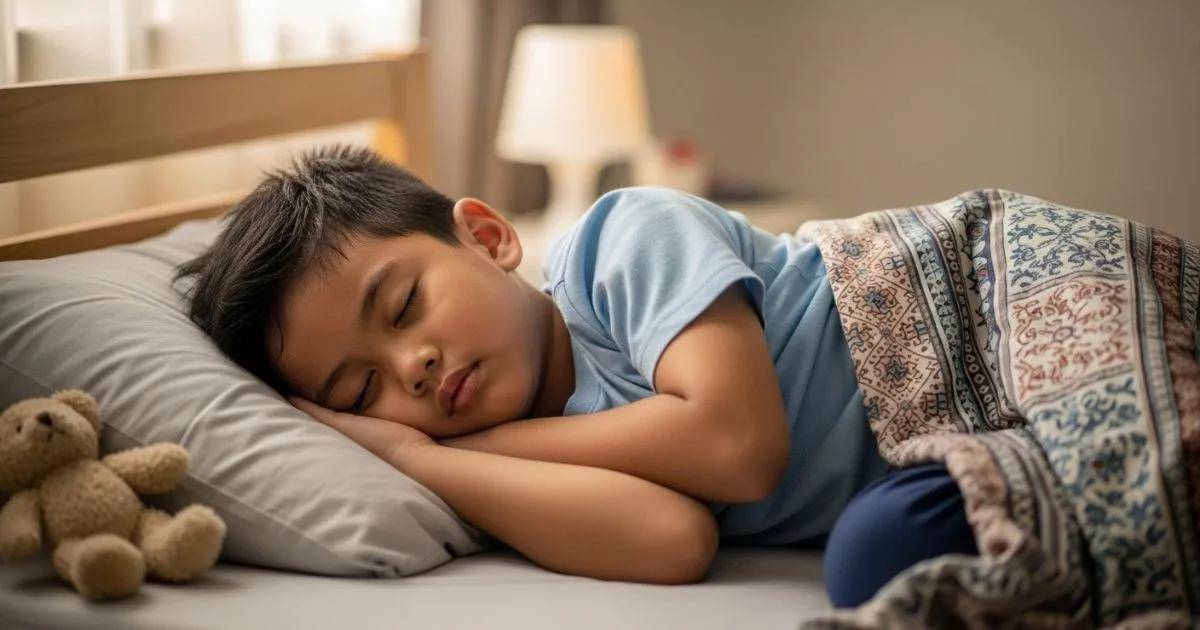
Children do not always sleep well, and occasional difficulty at bedtime is common. However, repeated problems falling asleep, frequent waking, or persistent daytime tiredness may indicate that a child’s sleep habits need attention.
Good sleep supports a child’s growth, learning, mood, memory, and overall health. The amount of sleep a child needs also changes with age.
Common Causes of Sleep Problems
Irregular schedules: Going to bed and waking up at different times each day can make it harder to maintain a healthy sleep pattern.
Screens before bedtime: Phones, tablets, television, and video games can keep children mentally stimulated when they should be preparing for sleep.
Stress and worries: School problems, family changes, fears, and other sources of stress can make it difficult for a child to relax at night.
Late or long naps: Daytime sleep is important for younger children, but naps that are too late or too long may interfere with nighttime sleep.
The sleep environment: Noise, bright light, excessive heat, or an uncomfortable bed can also make sleeping more difficult.
How Much Sleep Does a Child Need?
Sleep needs vary by age. Children ages 3 to 5 generally need 10 to 13 hours of sleep in 24 hours, including naps. Children ages 6 to 12 usually need 9 to 12 hours, while teenagers generally need 8 to 10 hours.
Getting enough sleep consistently is important, but sleep quality and regularity matter as well.
Simple Ways to Improve Sleep
A regular bedtime and wake-up time can help a child’s body develop a predictable sleep pattern.
A quiet bedtime routine can also make the transition to sleep easier. Reading, taking a bath, brushing the teeth, or listening to calm music can be useful alternatives to stimulating activities.
Parents can also keep electronic devices out of the bedroom and avoid activities that are likely to make the child more alert close to bedtime.
During the day, regular physical activity and exposure to natural light can support a healthy sleep schedule.
When Should Parents Be Concerned?
Occasional difficulty sleeping is usually not a sign of a serious problem. Persistent sleep problems, however, deserve attention, particularly when they affect a child’s behavior, concentration, school performance, or daytime energy.
Loud and frequent snoring is another important sign. Parents should speak with a pediatrician if a child regularly snores loudly, gasps, chokes, or appears to stop breathing during sleep. These symptoms can sometimes be associated with obstructive sleep apnea.
The Bottom Line
Most childhood sleep problems can be improved by establishing consistent routines and creating a calm environment for sleep. Children need different amounts of sleep as they grow, so their schedules should be adjusted according to their age.
When sleep difficulties continue despite healthy habits, or when they are accompanied by breathing problems, loud snoring, or significant daytime tiredness, parents should consult a pediatrician.
Sources: American Academy of Pediatrics and Mayo Clinic.