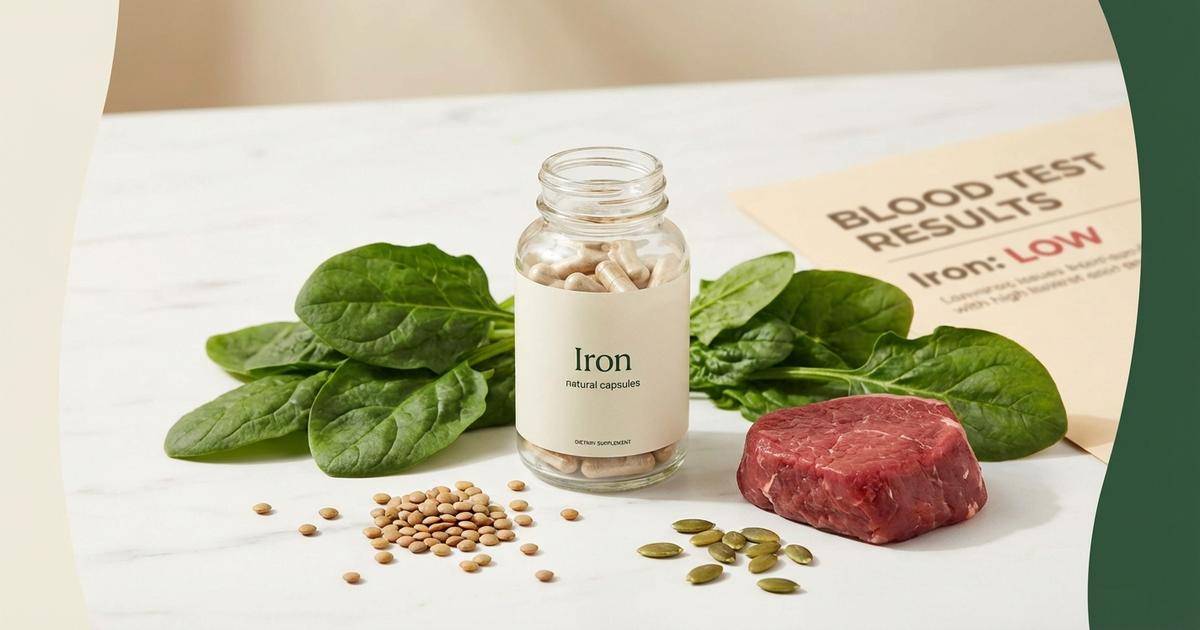
Iron deficiency occurs when the body does not have enough iron to produce the hemoglobin needed to carry oxygen in the blood. If the deficiency becomes severe, it can lead to iron-deficiency anemia.
The symptoms may develop gradually, and some people may not notice them at first.
Common Symptoms
Persistent tiredness: Feeling unusually tired or lacking energy is one of the most common signs.
Pale skin: Some people may notice that their skin looks paler than usual.
Shortness of breath: Low iron levels can make a person feel short of breath during normal activities, particularly when anemia becomes more severe.
Headaches or dizziness: Reduced oxygen delivery can sometimes cause headaches, lightheadedness, or dizziness.
Fast heartbeat: The heart may beat faster as the body tries to compensate for reduced oxygen-carrying capacity.
Weak or brittle nails: Changes in the nails can sometimes occur with prolonged iron deficiency.
Who Is More Likely to Develop Iron Deficiency?
Iron deficiency can affect anyone, but some people have a higher risk.
Women with heavy menstrual bleeding, pregnant women, young children, frequent blood donors, and people with certain digestive conditions may be more likely to develop iron deficiency.
A diet that does not provide enough iron can also contribute to the problem.
Why Iron Is Important
Iron is an essential mineral used to make hemoglobin, a protein in red blood cells that carries oxygen throughout the body.
When the body does not have enough iron, oxygen delivery can be affected. This may lead to tiredness, weakness, and reduced ability to concentrate.
When Should You See a Doctor?
Persistent tiredness or other symptoms of iron deficiency should not automatically be treated with iron supplements.
Several medical conditions can cause similar symptoms, and taking too much iron can be harmful. A healthcare professional can determine whether blood tests are needed to check iron levels and identify the underlying cause.
The Bottom Line
Iron deficiency can develop slowly and may initially cause only mild symptoms. Persistent tiredness, pale skin, dizziness, shortness of breath, or unusual weakness may be signs that deserve medical attention.
If iron deficiency is suspected, proper testing is more useful than taking supplements without medical advice. Finding and treating the underlying cause is an important part of restoring healthy iron levels.
Sources: National Institutes of Health and other reputable medical references.